

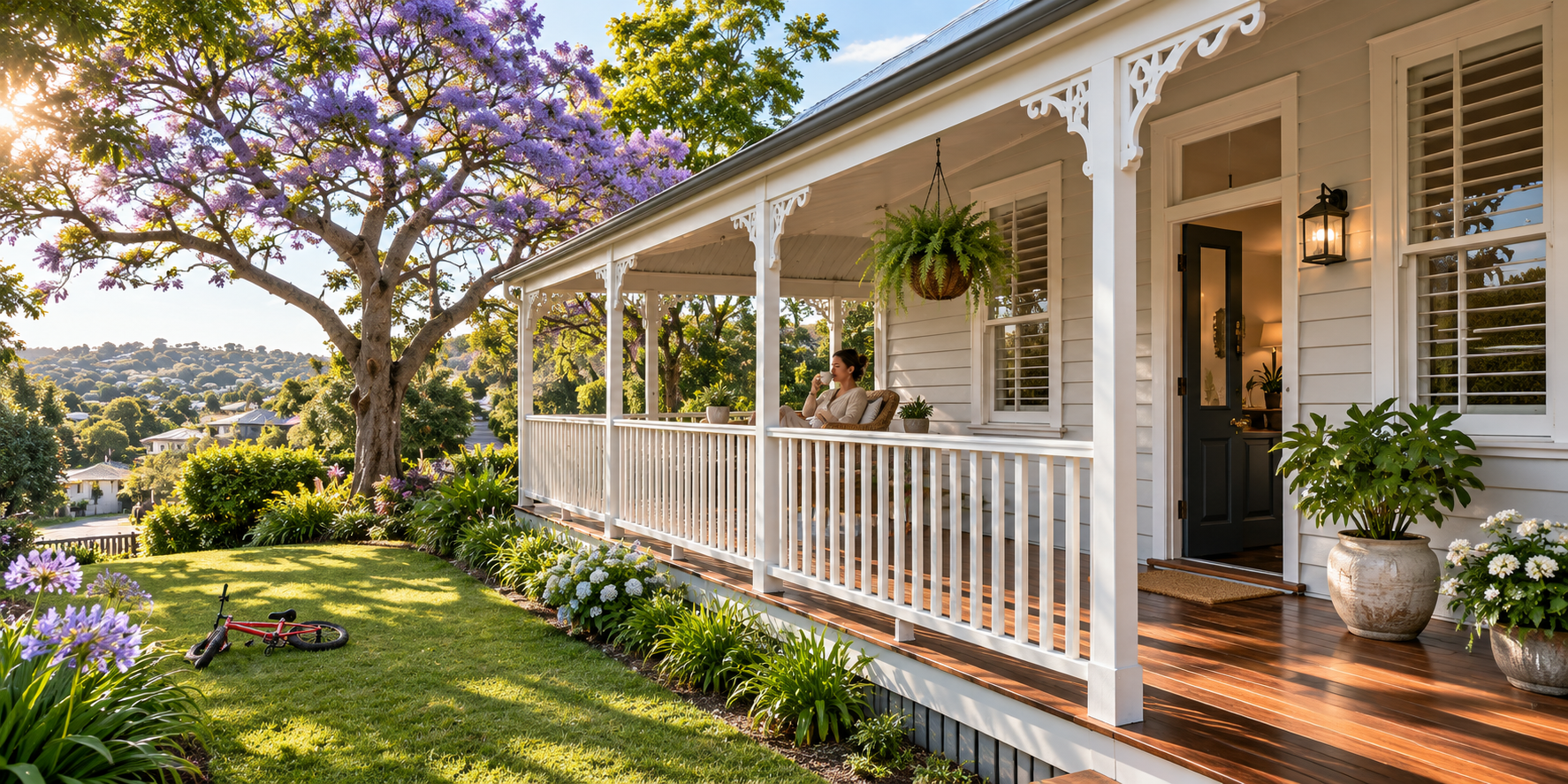
Selling your home · From our side of the table
To you, it's home. To buyers, it's a property. Our job is to look after both.
If you've ever heard an agent call your place "the property" and felt a little flat, this one's for you.
Why we say "the property"
We'll be honest, we say it a lot. "The property gets great morning light." "The property will suit a young family." And every now and then, we see a seller's face drop a little when we say it.
That's fair enough. You're not selling a property. You're selling the place you brought your babies home to, where the dog wore a track along the side fence, and where every birthday cake got cut on the same kitchen bench.
We've heard it put this way. When someone asks an agent to sell their home, the honest answer is no. Your home isn't for sale. The memories, the noise at Christmas, the life you've lived there, all of that comes with you. What goes on the market is the property.
So we don't use the word to brush any of that aside. We use it because once your home goes on the market, two things are true at once. It's still your home. It's also a property that buyers will walk through, compare with others and put a price on. Part of our job is keeping both of those in view, so you don't have to carry the second one on your own.
What you see, and what buyers see
When you walk through your front door, you see years. A buyer at an open home might spend 15 or 20 minutes inside, and most of that time they're trying to picture their own life in your rooms.
That isn't buyers being cold. They just don't see what you see. So they look at what they can: the light, the layout, the storage, the walk to school, and anything that looks like a job for the weekend.
The back deck
You see: three summers of weekends building it, board by board.
A buyer sees: a deck, and hopes it's a solid one.
The pantry door
You see: the kids' height marks, every birthday, in pen.
A buyer sees: a door that needs a coat of paint.
The garden
You see: the roses your mum planted, and her, every time you walk past.
A buyer sees: a garden they may or may not have time to look after.
None of that makes your memories worth any less. It just means the things that make a house special to you, and the things that make a buyer pay well, aren't always the same things.
 |
Here's the good news: a lot of the time, the two overlap. The deck where you have your morning coffee in the sun. The quiet street the kids rode their bikes up and down. The kitchen window that looks straight onto the backyard. What you love about your home is usually a pretty good clue to what the next owner will love too. That's why we ask, and plenty of it ends up in your listing. |
Where the gap tends to show up
The price
This is the big one, and it's the conversation we take the most care with. The love and work you've put into your home are real, and we'd never pretend otherwise.
The hard truth to swallow
Buyers can only pay what the market supports, and they're weighing your home up against everything else they could buy. What it means to you doesn't show up in the sales figures, however much it's worth.
So rather than handing you a number and asking you to take our word for it, we show you the recent sales we'd compare your home with. It can feel a little unemotional, but being upfront with you is in your best interest. That way, the price isn't our opinion up against your feelings. It's something we look at together.
Getting it ready
When we suggest packing away the family photos or clearing the fridge door, it can feel like we're asking you to rub yourself out of your own house. We're not. We're making a bit of room so buyers can picture their own photos on that wall. You'll be packing it all up soon anyway, so think of it as a head start on the move.
Buyer feedback
Open home feedback can sting. "The second bedroom's a bit small." "Not sure about the bathroom tiles." Especially when you picked those tiles yourself.
We'll always pass feedback on, because you need it to make good decisions. But we'll give you the context with it: whether it's one person's taste or something we keep hearing, and whether it actually changes anything about price or plan.
You don't have to stop loving your home to sell it well.
A few things that make it easier
- Take photos of the bits you'll miss before anything gets moved or styled. The pantry door, the garden, the kids' rooms just as they are.
- Decide early what's coming with you. In Queensland, things fixed to the house or planted in the ground, like light fittings, built-ins and established plants, generally go with the sale unless the contract lists them as excluded. If Mum's roses or that pantry door are coming with you, tell us before we go to market so it's sorted properly. The Queensland Law Society has a handy overview of the contract side.
- Plan to be out during open homes. Buyers relax and look properly when the owner isn't there, and you'll be spared hearing a stranger's thoughts on your wallpaper.
- Let yourself feel it. Plenty of sellers who are completely sure about moving still have a wobble on contract day or at the final walk-through. That's normal, and it doesn't mean you've made the wrong call.
Turning your old home into a rental?
Plenty of investors start out by renting the house they used to live in. If that's you, this is the moment to be really clear with yourself: it may never be just your house again. It's now an investment.
That takes a bit of a mental shift. A small part of you will always know you're giving another family a home, and that's a nice thing to feel. But there's a much bigger process around it now, from rent and repairs to tenant requests and the occasional tough call. Those decisions go better when you can look at them objectively, the way you'd look at any other investment.
It helps to remember the flip side too. For your tenants, it's home now. They've hung their photos and they've worked out which window sticks.
Questions sellers ask us
Is it normal to feel emotional about selling, even if I want to move?
Very. Wanting the next chapter and missing the last one can happen at the same time. Most of the sellers we work with feel it at some point, often when the sign goes up or on the last walk-through.
Will my agent think I'm being difficult if I question the price?
Not at all. It's your home and probably your biggest asset, so you should question it. Ask us to walk you through the sales we've compared it with and why we chose them. A good price conversation goes both ways.
Should I stay home during open homes?
We'd suggest heading out. Buyers tend to open cupboards, talk openly and stay longer when the owner isn't there, and that's what you want. Grab a coffee, take the dog for a walk, and we'll call you afterwards with how it went.
Can I take garden plants or light fittings with me?
You can, as long as it's sorted in the contract. Items fixed to the house or planted in the ground generally stay with the sale unless they're listed as excluded fixtures. Let us know early, and your solicitor or conveyancer can confirm anything you're unsure about.
What if the home holds a lot of family history, like a parent's place?
Take the time you need. We can start with a quiet chat about what it's worth, with no plans to list, and go from there at your pace. If several family members are involved, we'll keep everyone in the loop so no one feels left out of the decisions.
It'll always be your home to us, too
Selling well does mean looking at your place through a buyer's eyes for a little while. You don't have to do that alone, and you don't have to pretend it doesn't mean anything to you. We'll handle the property side. You get to keep the home part.
If you're starting to think about selling, an appraisal is a good first step. We'll show you how we see your home, what buyers are likely to notice, and the sales we'd compare it with.
Not sure who to talk to?
Send us an email. We'll look at your situation and your location, and find you the best fit.
General information only and current as at November 2026. This isn't financial or legal advice. For advice specific to your situation, please speak with a qualified professional.
You might also be interested in

Nov 12, 2026
Seen the Downturn Headlines?
You've probably seen it on the news lately. Queensland is heading for its biggest property downturn in 40 years, and some Brisbane suburbs have dropped more than 10% in three months. Every conversa

Nov 5, 2026
Auctions: Going, Going, Gone
The Block has certainly brought everyone's attention back to the wonderful world of auctions. If you watched the finale, you'll know the feeling: the nerves, the long pauses, and then the moment th